
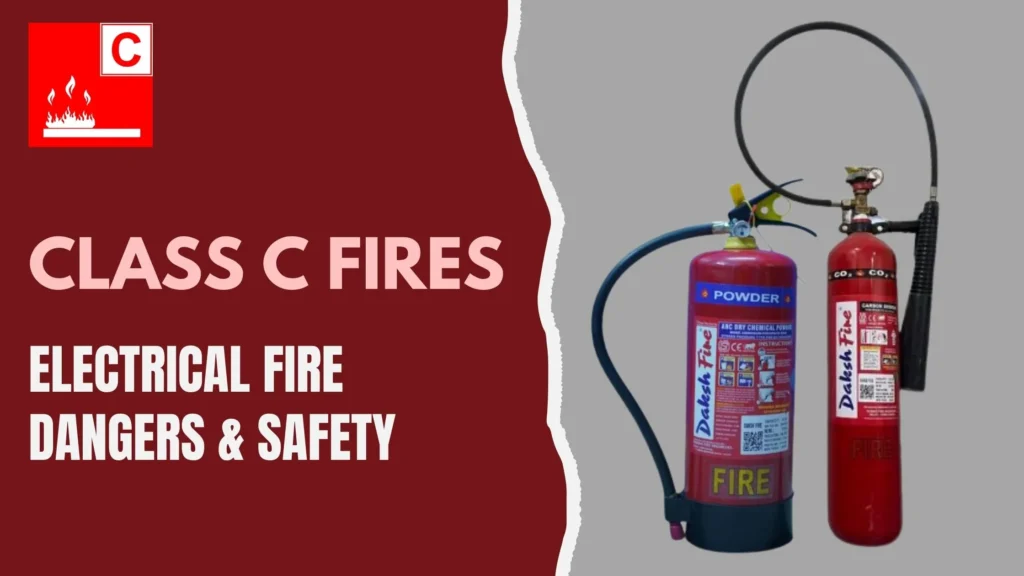
Electrical fires, classified as Class C fires, are among the most dangerous types of fires due to the risk of electric shock and rapid fire spread through wiring systems. These fires commonly occur in homes, offices, commercial buildings, and industrial facilities where electrical equipment is in constant use. Understanding Class C fires, their causes, and the correct safety measures is essential to protect life, property, and ensure compliance with fire safety regulations.
What Are Class C Fires?
A Class C fire involves energized electrical equipment such as wiring, circuit breakers, control panels, appliances, and machinery. The defining factor is that electricity is actively supplying power to the burning source. Once the electrical supply is disconnected, the fire may turn into another class, such as Class A or Class B, depending on the material involved.
This is why every fire safety guide mentions classes of fires. Because each type needs a different extinguisher. And in short, Class C fire involves gas-based fire.
Common Sources of Class C Fires
- Faulty or aging electrical wiring
- Overloaded power sockets and extension cords
- Short circuits and loose connections
- Damaged electrical appliances
- Poorly maintained switchboards and panels
Why Class C Fires Are Extremely Dangerous.
- Risk of Electric Shock – Using water or foam on a live electrical fire can result in severe electric shock or electrocution. Electricity can travel through conductive extinguishing agents, putting anyone nearby at serious risk.
- Rapid Fire Spread Through Wiring – Electrical fires can spread quickly through cable insulation, conduits, and concealed spaces, making them difficult to detect and control in the early stages.
- Hidden Electrical Fire Hazards – Many Class C fires start behind walls, ceilings, or inside panels, allowing flames to grow unnoticed until significant damage has occurred.
Common Places Where Class C Fires Occur.
Residential Buildings
- Main electrical panels
- Air conditioners and heaters
- Inverters and battery systems
- Kitchen appliances
Commercial and Office Spaces
- Server rooms and data centers
- UPS systems
- Office equipment such as printers and copiers
Industrial and High-Risk Areas
- Factories and production units
- Control rooms and generator rooms
- Electrical substations
How to Safely Extinguish a Class C Fire.
Turn Off the Power Source First
Whenever possible, disconnect the electrical supply before attempting to extinguish the fire. This significantly reduces the risk of electric shock.
Approved Fire Extinguishers for Class C Fires
- CO₂ Fire Extinguishers – Ideal for electrical fires, as they do not leave residue
- ABC Dry Chemical Extinguishers – Effective and commonly used for electrical hazards
- Clean Agent Fire Extinguishers – Suitable for sensitive electronic equipment
Fire Extinguishers You Should NEVER Use
- Water fire extinguishers
- Foam fire extinguishers
Step-by-Step Guide to Using a Fire Extinguisher on Electrical Fires.
PASS Method Explained
- Pull the safety pin
- Aim the nozzle at the base of the fire
- Squeeze the handle
- Sweep side to side until the fire is out
Safe Distance and Evacuation Tips
Always maintain a safe distance and ensure you have a clear exit route. If the fire grows or power cannot be disconnected, evacuate immediately and call emergency services.
Prevention Tips to Avoid Class C Electrical Fires.
- Regular Electrical Inspections – Have qualified electricians conduct periodic inspections and maintenance to identify potential hazards.
- Avoid Overloading and Improper Wiring – Use certified wiring, proper circuit breakers, and avoid excessive load on electrical outlets.
- Fire Safety Training and Awareness – Regular fire safety training helps occupants respond quickly and correctly during an electrical fire emergency.
People Also Ask (FAQs)
- What type of fire extinguisher is best for Class C fires?
CO₂ and ABC dry chemical fire extinguishers are best suited for Class C electrical fires.
- Can water be used on a Class C fire?
No. Water should never be used on energized electrical fires due to electrocution risk.
- What causes most electrical fires?
Faulty wiring, overloaded circuits, poor maintenance, and damaged equipment are the leading causes.
- Are Class C fires the same as Class B fires?
No. Class C fires involve energized electrical equipment, while Class B fires involve flammable liquids.
- What should you do first during an electrical fire?
Disconnect the power supply if safe to do so and use the correct fire extinguisher.
Conclusion.
Class C fires pose serious risks due to live electricity and hidden fire spread. Understanding their causes, using the correct extinguishing methods, and following preventive measures can significantly reduce danger. Investing in proper fire safety equipment, training, and compliance is essential for protecting lives and property from electrical fire hazards.
📢 Follow us on Instagram and Stay updated with the latest fire safety tips, equipment insights, and emergency readiness advice.